Blog / Service
Service Basics: Honda Transmission Service
When it comes to maintenance, you've got your bases covered. You religiously get your Honda's engine oil changed when it's due (or sooner). Your tires are rotated to maintain even tread at all four corners. Your fuel system is cleaned regularly. You have your brake fluid and power steering fluid changed whenever it's recommended. But an often-overlooked item is the Honda transmission service.Your transmission is like your engine in that it uses fluid to cool and lubricate internal parts. Obviously, with a different purpose there are changes in service requirements. The transmission fluid is a synthetic-based oil and its operating conditions are very different from the engine's heat and explosive energy. For that reason, a Honda transmission service is due much less frequently than an engine oil change.
Read more
How is Your Honda's Suspension Doing This Spring?
Winter takes its toll on everything, and your Honda's suspension is no exception. Icy ruts on the roads toss your car all over the place. Sometimes, sliding is unavoidable and a curb just happens to be in the way. And when spring takes over from the chilly winter, potholes pop up all over Kansas City.How has your Honda's suspension fared? Is it holding up strong or are there little symptoms that might need attentions soon? Here are a few items that might be telling you that your Honda's suspension needs some work.
Read more
What Are the Signs of Brake Issues?
No matter what kind of vehicle you drive, how you drive it, or where you drive, your brakes will eventually wear out. That's what they are designed to do. They operate by squeezing soft metallic friction material - brake pads - against a hard metal surface - brake rotor. The friction causes your vehicle to slow down but also causes the brake pads to wear. That means over time, you're going to have brake issues.Do you know what to expect when your brakes are worn? Or is there some other condition happening that needs to be addressed?
Read more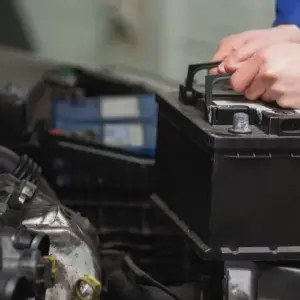
How is Your Car Battery Doing?
If you've felt that crisp breeze in the early morning and noticed the leaves are starting to turn just a hint of yellow, it means that autumn is on its way. Soon, the trees will be bare and you'll be bundling up to brave the elements every time you leave the house. But how will your car fare this winter? Is your battery up to the task?Whenever you start your car, it takes a toll on your battery. There's a large draw of power from its reserve, and that needs to be recharged before you turn your car off again. In cold weather, your engine is harder to turn and the starter requires even more power than usual to fire up the motor. Your battery won't last forever with all that stress. So what can you do to make sure you aren't left out in the cold with a car that won't start?
Read more
How to Get the Best Fuel Economy From Your Honda
It's widely known that Honda vehicles are among the best in the business for fuel economy. From their early years, Honda recognized the need for lower fuel consumption across their vehicle line without compromising on a fun-to-drive attitude. Even so, fuel costs can quickly add up. Whether you drive a Ridgeline, an Odyssey, a CR-V or a Civic, there are ways you can stretch your fuel dollars a little further.
Read more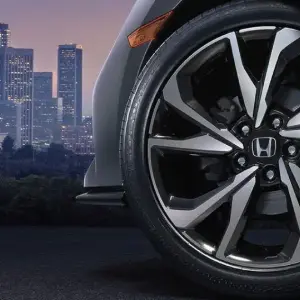
How to Make Your Honda Tires Last As Long As Possible
You hear an awful lot about horsepower and torque, braking and acceleration. All-wheel drive, front-wheel drive - you can find a Honda to suit your needs in any configuration. One thing every Honda has in common - your Honda tires are the only thing that touch the ground.That's right. The only parts of your car that actually make contact with the road are your tires. No matter how powerful the engine is or how amazing the brakes are, your Honda tires are how you keep stable and stuck to the road.Tires are expected to wear out over time. That's how they're rated and you can count on it happening. Most tires last anywhere from 30,000 to 60,000 miles, give or take. And when the time comes to replace them, tires can be expensive. That's why you want your Honda tires to last as long as possible. Here's how you can do that.
Read more
Should You Fix Your Clunker or Ditch It?
You've formed a bond with your vehicle. You love everything about it, from the character speed holes in the fenders to the squeaks and rattles when you drive over bumps. Sure, there are features that only work sporadically like the power windows, but you've worn the driver's seat to fit you just right. Best of all, it's paid off. So now that you're having a problem with your clunker, it's a tough choice whether to fix it or get something new.
Read more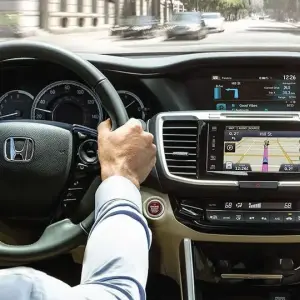
Do You Know What Your Warning Lights Mean?
When you start your Honda, no matter which model you drive, you'll see the warning lights all come on for a second then go off. This is just a bulb check, a mandatory vehicle self-test that happens on every vehicle with modern systems. But if a warning light comes on otherwise...Do you know what your warning lights mean? Do you know the difference between the symbols and colors? Here are a few tips on your warning lights and what they mean to you.
Read more
What's the Check Engine Light All About?
It's common knowledge that Honda cars, SUV's and trucks are among the most dependable, long-lasting vehicles on the road. The name Honda is virtually synonymous with reliability. That means you're never going to experience a problem with your Honda, right? Well, not always.You see, sometimes issues come up that are environmental, are caused by physical damage, and yes, even the very occasional manufacturer's defect. It happens to the best of us.One such issue that you may come across is the Check Engine light, or malfunction indicator light (MIL). That little amber light illuminates on your instrument cluster anytime a fault is detected by the onboard diagnostics system. It's there to tell you when your Honda has found a problem with itself and is a handy little light to have.
Read more